RESL 1500 Winter 2026. Thompson Rivers University.
INTRODUCTION
My name is Benjamin Sinclair and I am currently in my last semester of a BSc here at TRU, majoring in chemical biology. I have had multiple research positions during my time here and gained confidence in the research process, including formulating and testing research questions, working through challenges, and communicating results.
My first position was as a research assistant for Dr. Eric Bottos from January to August of 2024. At this time, I gained experience with basic molecular biology techniques and the process of lab research mainly by helping with other students’ projects. The next summer, I worked in the same lab under an NSERC undergraduate student research award on my own project, where I developed and validated primer sequences for three gene targets on the bacteria P. gingivalis. This project greatly increased my understanding of the research process, especially the resiliency required when inevitable barriers are met.
In the fall term of 2025, I began a directed study research project under Dr. Heidi Huttunen-Hennelly on a microbiology based experiment. This work has broadened my research experience to another topic, and presented me with new challenges of the research process. Specifically, I am continuing the work of previous students, which has many benefits but has also posed unique challenges.
Alongside these two main research projects, much of my coursework has given me practice in research skills like conducting productive background research, drawing meaningful and legitimate conclusions from data, and designing sound methodology. Group and partner lab projects in multiple courses have shown me the importance of communication and collaboration when researching, which I have brought into my other projects. All of these experiences together have given me a strong grasp on the research process including method design, data collection and analysis, and communication of findings.
THE STANDARDS
Directed Study – Fall 2025/Winter 2026
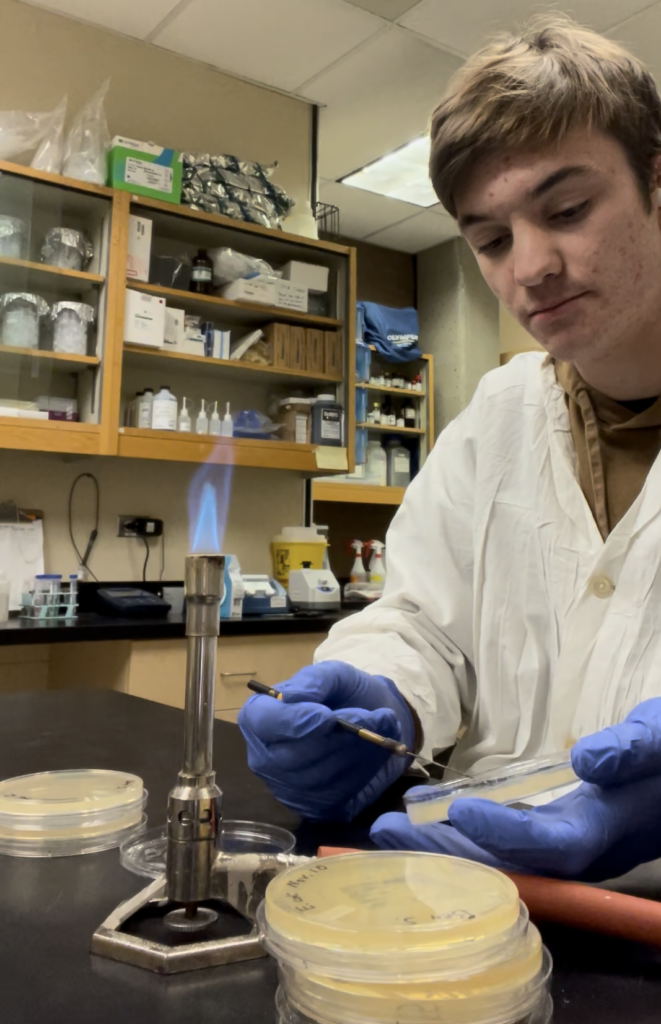
In Fall 2025, I began a research project with Dr. Heidi Huttunen-Hennelly that examines the anti-biofilm capability of novel antimicrobial peptides. I completed a project description (attached below) beforehand. This project involves microbiology lab work to investigate the antibiofilm activity of antimicrobial peptides, along with data interpretation and then presenting results.
UREAP – Winter 2026
I completed this application form for the undergraduate research experience award program (UREAP). This research proposal required extensive background research, formulation of research questions, and methodology proposal. The UREAP award was won to fund and supplement the directed study project above.
NSERC USRA – Summer 2025
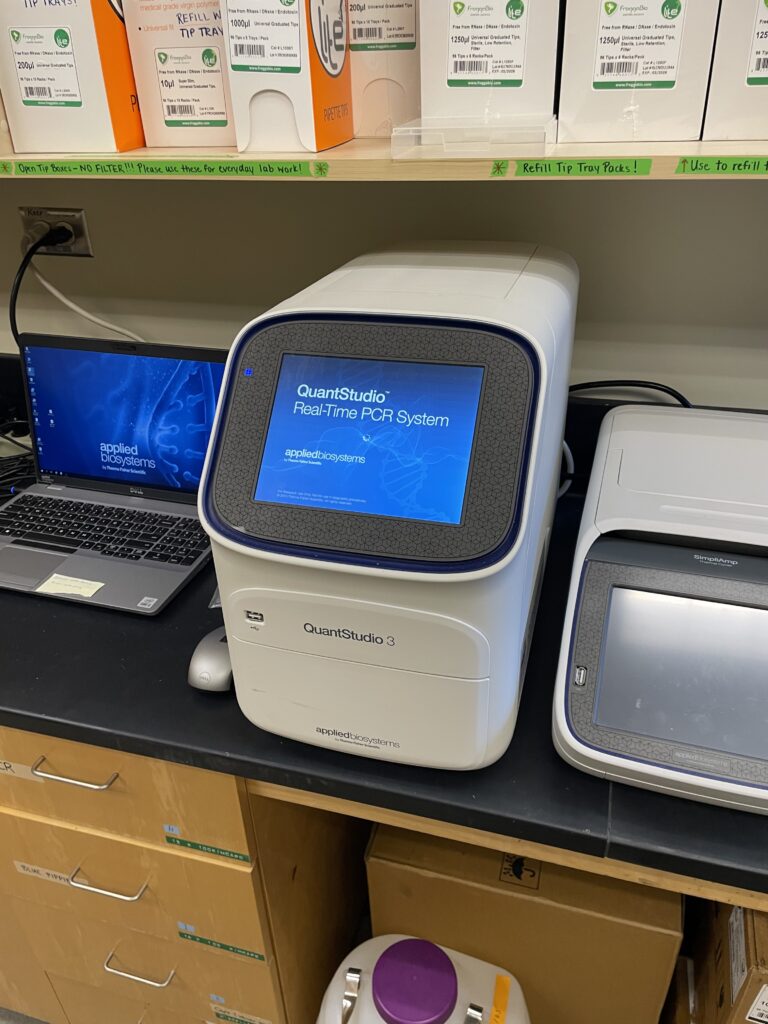
Worked under Dr. Eric Bottos on a independent project that aimed to develop a quantitative PCR assay of the oral bacterium Porphyromonas gingivalis. Custom primer and probe sequences were designed for three gene targets and then tested in lab. The assay using all three targets was validated on quantitative PCR and digital PCR platforms. See other sections for methodology and a poster!
CHEM 4450 (Advanced Chemical Biology) – Winter 2026
This course is currently underway during Winter 2026, my last semester. It involves a class directed research project with all the background research, hypothesis development, method development, and results interpretation are done as a class group. The project, which uses cultured endothelial cells as a model system, has many logistic challenges that I am working through with the other students to ensure we are doing experiments that will produce strong results that directly address our research questions.
CHBI 3980 (Introduction to Research) – Winter 2025
I completed the course CHBI 3980 (Introduction to Research for Chemical Biology). The course allows students to focus on the process of formulating a research hypothesis and producing a research proposal. I met the learning objectives of this course during my research assistant position with Dr. Eric Bottos in Winter 2025.
Critical Thinking and Writing for Science and Technology (CMNS 2300)
I completed this course in Winter of 2024. The course description is as follows: “Students analyze and discuss examples of writing from scientific and technical literature to improve their communication skills for lay and scientific audiences. Students learn to identify and produce writing styles and formats appropriate for science-based contexts and audiences, as well as develop skills in writing and documenting research documents on science and technology topics.”
Co-Authored Literature Review – CMNS 2300 (Winter 2024)
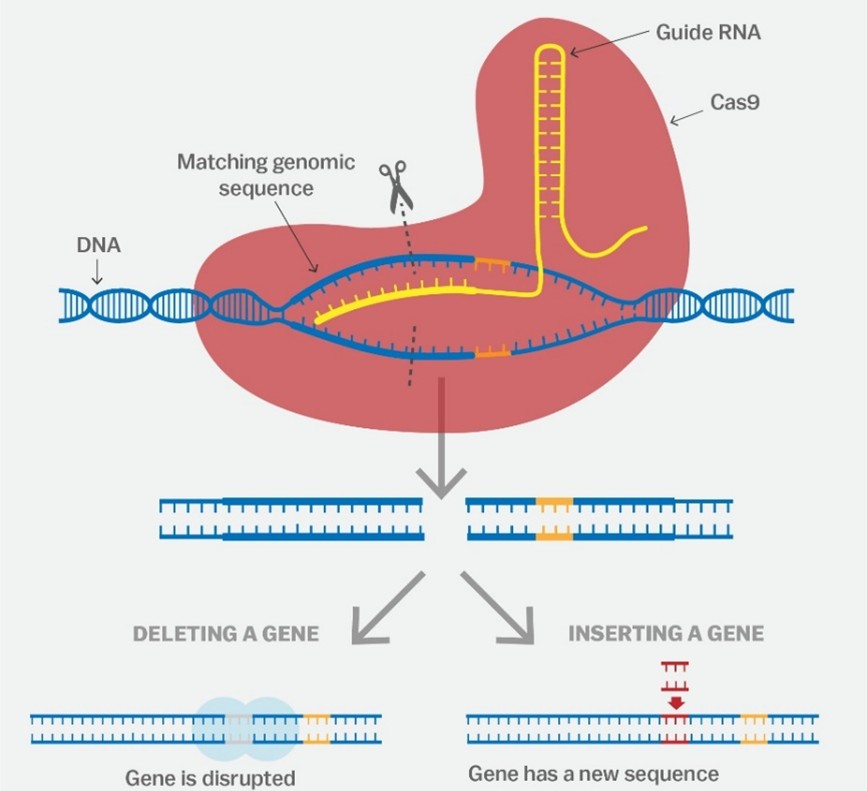
This review paper was written with a partner for the above course, which I completed in the Winter 2024 semester. The focus of the assignment was to properly evaluate, compare, and synthesize a variety of writings on a single topic. Both partners contributed equally.
Co-Authored Literature Review – BIOL 4350 (Fall 2025)
This literature review was written with two collaborators about the epigenetic factors associated with the aging process. A main goal of this paper was to critically evaluate and compare multiple scientific papers. Each group member contributed equally.
Presentation of Scientific Paper – CHEM 3220 (Fall 2024)
This presentation was given to quickly summarize a synthetic organic chemistry article. It was challenging to critically evaluate and present this complex article in such a small presentation but it greatly improved my research interpretation skills.
Directed Study, Biofilm Assay Methodology – Fall 2025 to Winter 2026
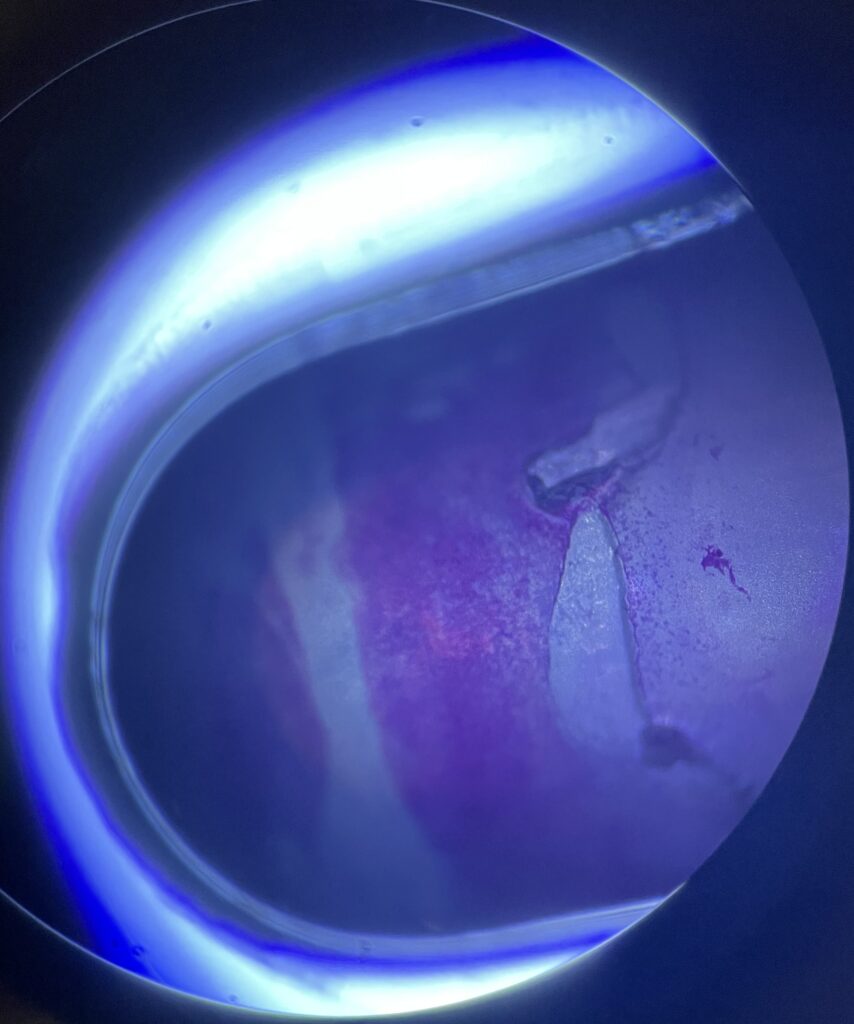
The methodology linked below describes how to determine the antibiofilm activity of a potential antimicrobial agent. The method is based on the manufacturer’s manual for the apparatus used (Innovotech Biofilm growth plate) but I adapted it to the timeline, materials, and lab equipment that I worked with. I wrote out this methodology after multiple runs of the assay.
NSERC USRA Methodology – Summer 2025
This document was written by me and describes a majority of the methodology used for development of a qPCR assay of P. gingivalis that I worked on during my NSERC USRA research.
Lab Report – Chem 3170 (Fall 2024)
This methodology was conducted to determine the protein composition of milk samples. This analytical chemistry experiment was one of many I completed in this course and others. These methodology were provided by the course material then implemented in lab and reported in the report.
Cell Physiology Lab Experiment – Chem 3520 (Winter 2025)
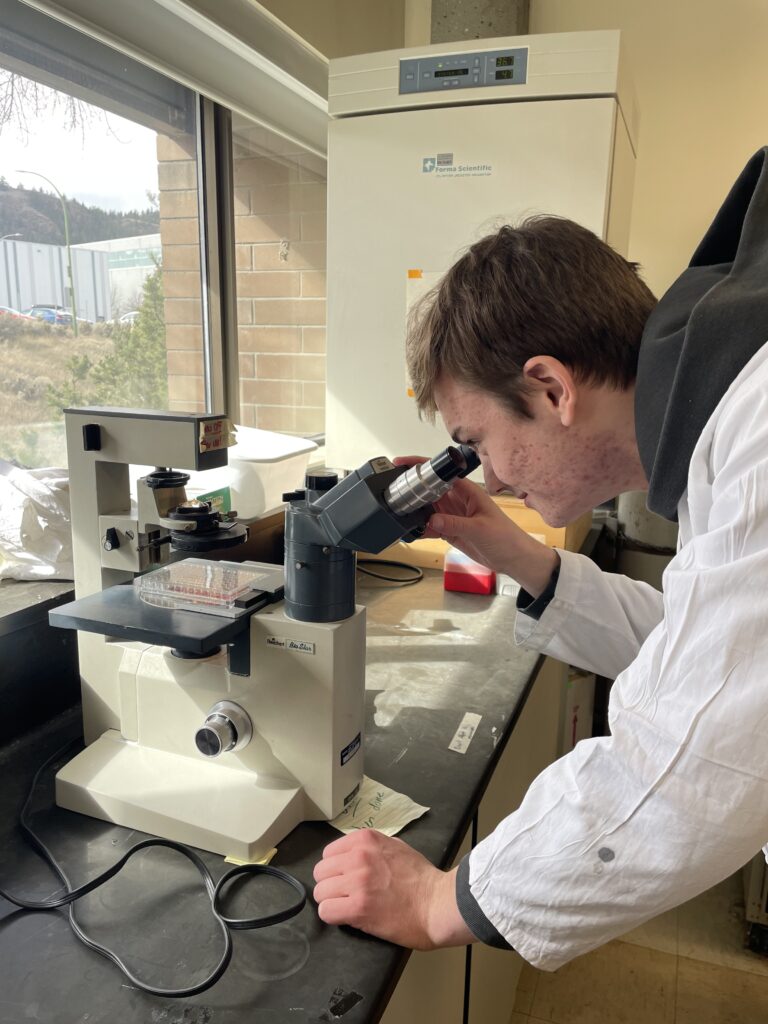
This laboratory experiment was conducted with a group to determine the effects of high sugar concentration on live eukaryotic cell culture. The experimental methods were developed by myself and my collaborators based on prior labs in the course and also from literature. All methodology is reported in the lab report. The report was written with equal contributions from myself and two other group members.
Research Report – Directed Study (April 2026)
This research report was written from all the antibiofilm peptide experiments and peptide DNA binding activity experiments I completed for my directed study/UREAP project. It includes an introductory review of literature, methodology section, results and discussion.
Lab Report – Biol 4150 (Fall 2025)
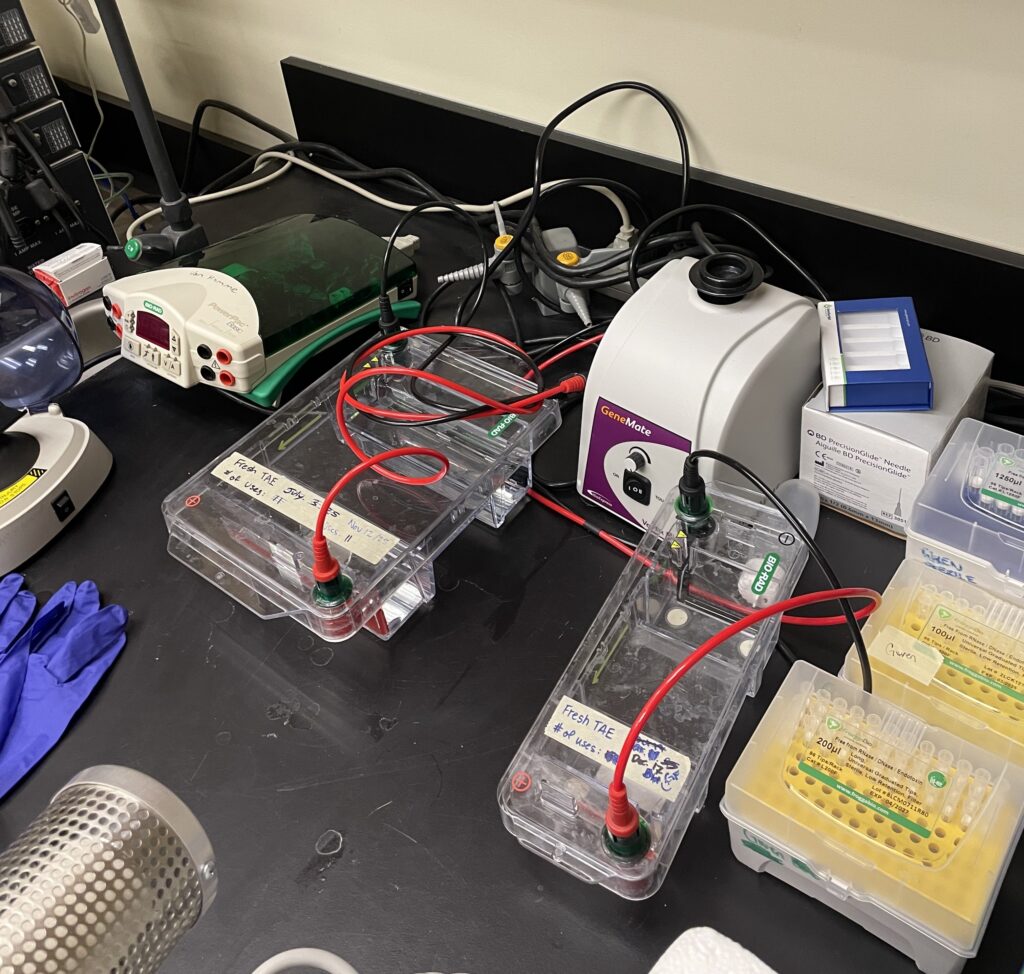
This lab report was one of the nine I completed for biochemistry experiments done in Biol 4150 – Biochemical Techniques I. A fairly large amount of data was collected in this experiment from a variety of methods and all interpretation and conclusions were outlined in the results and discussion sections.
P. gingivalis Project Results (Rough Draft) – Fall 2025
The below document is a rough draft of a written results section that I prepared from the raw data of my NSERC USRA P. gingivalis project. A collaborator is working on a manuscript of this project and they requested this rough written results section to work with. Since this was written, more data has been collected and a more polished version of the results can be found on the poster linked in a later section.
Molecular Cloning Project Report – Biol 4250 (Winter 2026)
This lab class introduced the technique of molecular cloning, which is infamously finnicky and challenging. In the attached report I describe the results and then draw conclusions about the experiment’s success. Possible explanations for unexpected results are also discussed in the document.
Lab Report – Chem 3170 (Fall 2024)
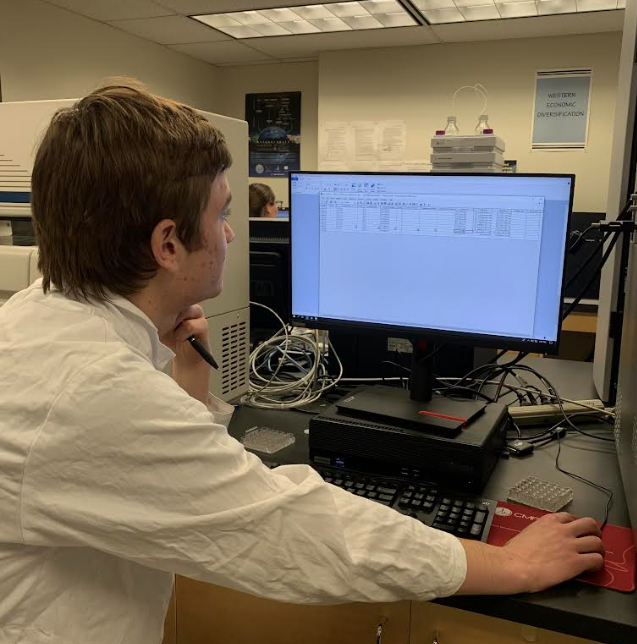
This is one example of the many analytical chemistry reports that I completed for Instrumental Analysis (Chem 3170). These experiments involved analysis of various samples using a variety of instrumentation and required interpretation of outputs like chromatograms and electropherograms as results. Statistics were also completed for these reports to put the results in better context. The discussion section comments on the results themselves but also the method validity.
Lab Report – Chem 3240 (Fall 2024)
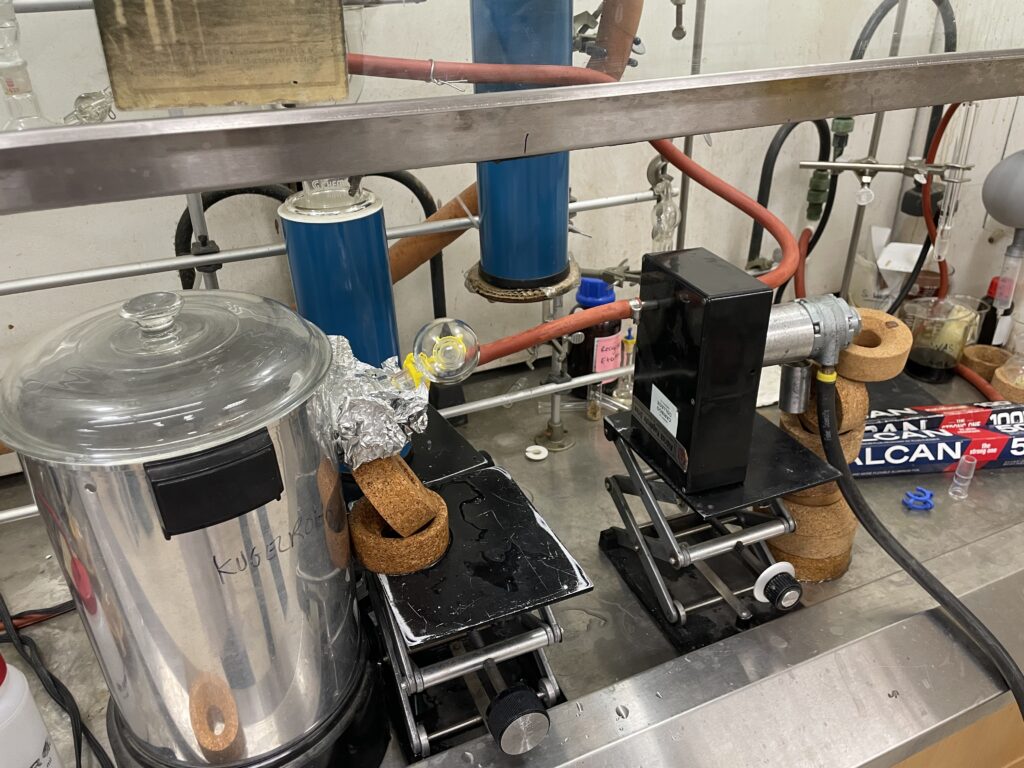
This is an example of an organic synthesis report completed for Chem 3240. Results for the synthesis, including spectral data, is included in table format and also interpreted in written form.
Biol 3000 (Biometrics ) – Fall 2025
This course focused on the process of analyzing and interpreting large datasets using statistics and graphing, especially using the programming language R. I came away with a basic approach to large datasets that I have since applied to data from other courses and my independent research. Below is the poster I created for a final research project using data collected during my research assistant position in Summer 2024.
In a Nutshell – Undergraduate Research Competition (February 2026)
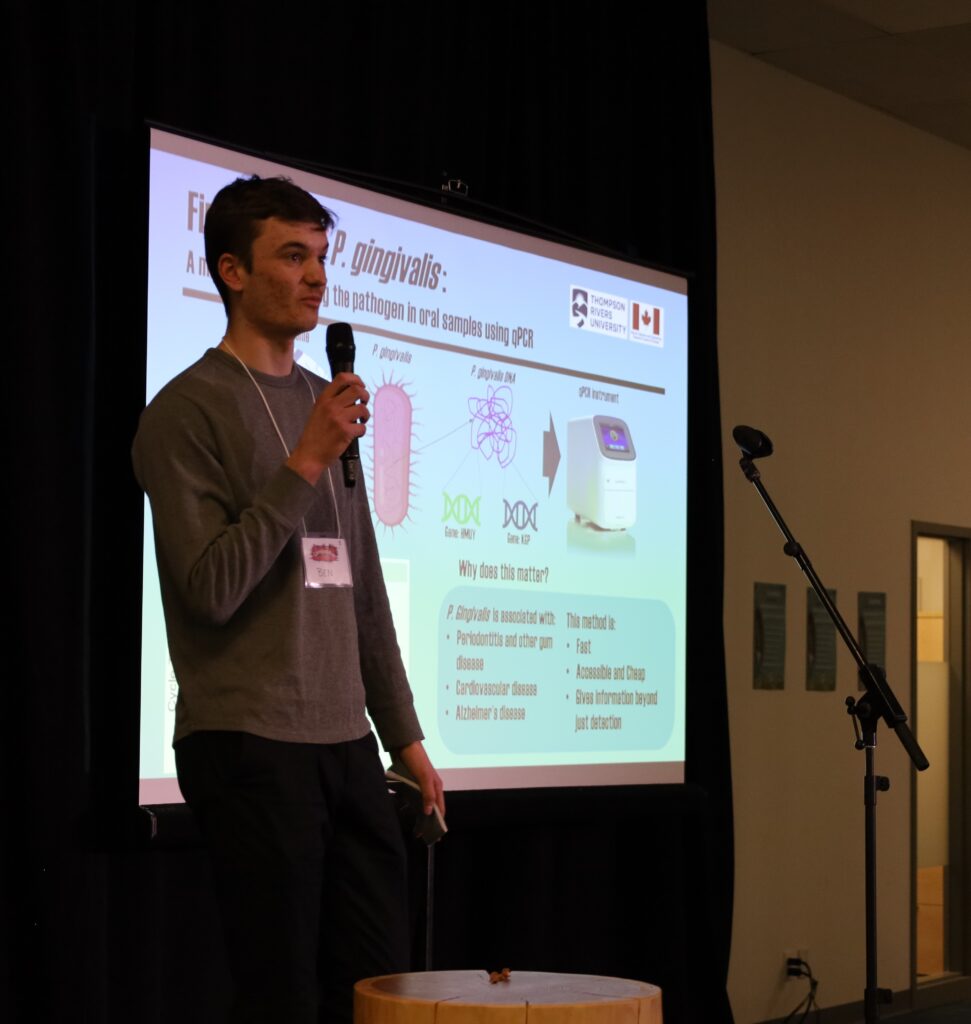
This is an annual event put on by TRU Research that challenges participants to present their research to a general audience in only 3 minutes and using only 1 slide. I presented my results from my NSERC USRA project using the slide attached below.
TRU SUPER Conference (April 2026)
This undergraduate research conference is a requirement for all students doing directed studies, honours, or UREAP projects. I presented the following poster of my directed study project to share my results. Many students there will be continuing with work similar to mine under the same supervisor and it was fun to answer their questions about the work.
TRU Undergraduate Research Conference (April 2026)
I presented my NSERC USRA results on a poster at the TRU undergraduate research conference on April 7th 2026. I submitted the abstract below for conference registration and will be presenting the poster linked in the following section.
Canadian Society of Microbiologists Annual Conference (June 2026)
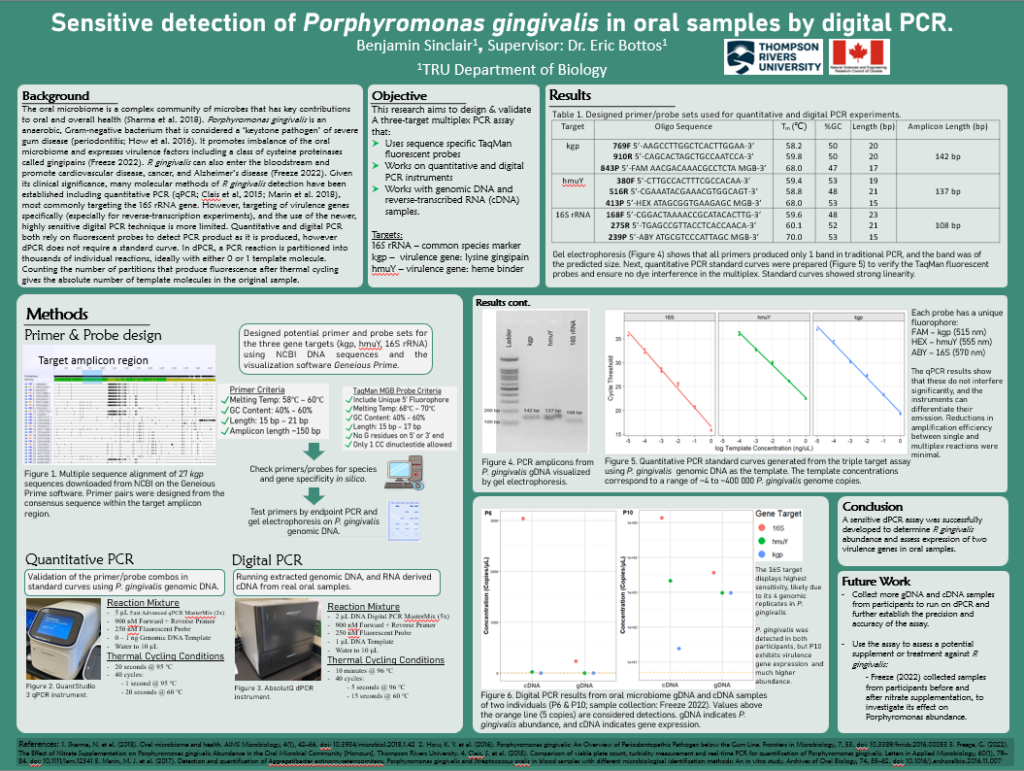
This upcoming conference is in Edmonton, Alberta from June 16-19. I will be attending and presenting a poster of my NSERC USRA P. gingivalis research. The poster draft is also attached in the link below.
REFLECTIVE ESSAY
I’ve been at TRU for almost four years now and will complete my chemical biology degree in April of this year (2026). Recently I have had a good chance to reflect on all my experience and learning here, especially the research portion. I’ve had the opportunity to work on both molecular biology and microbiology research projects, which have significantly enriched my learning and supplemented my normal coursework. Over the course of my degree, my view of the research process has changed drastically, and I’ve developed many new skills that are necessary for conducting sound scientific research.
Going into my first year of science at TRU, I knew that I wanted to do some sort of scientific research in my future career. I was very excited that my chemistry and biology courses included lab portions and I got early experience with performing experiments. The way these experiments were presented was simplistic, where things were established to work, we knew what results to expect, the procedures were clearly outlined and given to us, and the work could be completed in a three-hour period. If the expected results were not achieved from an experiment, it simply meant the procedure wasn’t followed properly. Despite what I thought at the time, this sort of lab experience was only about getting comfortable with practical lab skills, not about conducting proper scientific research. By the end of second year, I had good experience with practical skills, and lab report writing, in different fields of chemistry and biology.
At the end of second year, I also took CMNS 2300 which taught proper conventions for writing up scientific results. I also got the opportunity to write a literature review along with a partner, which was my first big exposure to the scientific literature. I learned that evaluating and synthesizing the findings and methodologies of existing research papers is a crucial element of conducting one’s own research. Furthermore, I learned that presenting the findings of a research project to both a scientific and general audience is an important skill that all researchers should develop.
Moving into third year, I had begun to learn more about the realities of the research process through a research assistant position over the summer with Dr. Eric Bottos. Instead of being given a strict procedure and the expected results, I was given an abstract research question and not much else. The project was bioinformatics based, meaning it used only pre-existing data from online databases. I knew little about this, and it took all summer to get some insights related to the original question. I had no procedure to work from, and instead I learned how to do background research and build a methodology myself.
The structure of my third year lab classes also shifted from previous years with less defined procedures, longer experiments that lasted multiple weeks, and less certainty in expected results. Multiple classes also introduced us explicitly to a more advanced version of the research process, where we had to conduct background research to address a research question with our own methodology. These projects brought in a little bit more of the non-linear, trial and error type of work that I learned good research should include. With these projects, along with my summer work, my perspective on research shifted to be a more abstract, non-linear process where adjusting and refining a methodology is the way to get expected results. I also learned that background research, whether that be from an instructor’s lectures or the online literature, is crucial to obtain the theory needed for designing a good methodology.
After third year is when I really felt I became a student researcher. I worked in Dr. Bottos’ lab again over the summer, but this time on my own project through an NSERC USRA. This project had a clear end goal of developing a quantitative assay for detection of the bacterium P. gingivalis by PCR. At first, the steps to get there felt gargantuan, but reviewing existing literature and previous student methodology provided a good place to work from. However, there was plenty of trial and error, with the methodology going through many small tweaks and iterations before everything finally worked. One major thing I realized was the amount of creativity needed for scientific research. The next steps were often uncertain during this project, and thinking with a creative mindset was absolutely necessary. I also realized through this project that interpretation of results has much more depth than I thought previously, and an intimate knowledge of every experimental variable and their interplay is needed when drawing conclusions.
In the Fall of fourth year, I began a directed study with Dr. Heidi Huttunen-Hennelly where I hoped to use my summer experience and new perspectives to conduct some good research in a slightly different field. The first challenge I faced was writing a research proposal, including formally developing and communicating my research question. This introduced me to the “real world” part of research, where doing things like funding/award applications or for-credit directed study proposals always precedes the experimentation itself. The work on this project is microbiology based and there are many other research students doing similar work, meaning I’ve had the opportunity to talk with them to compare methodologies and results. This has been really beneficial to my project and expedited the trial-and-error process significantly, and is something I now know to be of high importance in research.
Looking back on my time at TRU, my research experience has transformed my understanding of science from structured classroom exercises into a creative, collaborative, and iterative process of experimentation. Through both my independent research and coursework, I have developed practical laboratory skills but also the ability to think critically, communicate effectively, and adapt when experiments do not go as planned. My experiences have shown me that meaningful research depends heavily on curiosity, persistence, and collaboration as well as technical knowledge. As I move forward in my career, I will carry with me the confidence and perspective I have gained as an undergraduate researcher, along with a deeper appreciation for the complexity of scientific experimentation.